
Every month, the Board gathers to look at the P&L to understand the health of the enterprise. We look at revenue, we look at EBITDA, we look at churn. We feel in control.
But here is the uncomfortable truth: Traditional accounting was designed for the industrial age. It was built for physical assets that rust, wear out, and depreciate on a predictable schedule.
In the digital economy, your balance sheet is essentially a historical document it explains yesterday with perfect clarity while saying almost nothing about tomorrow.
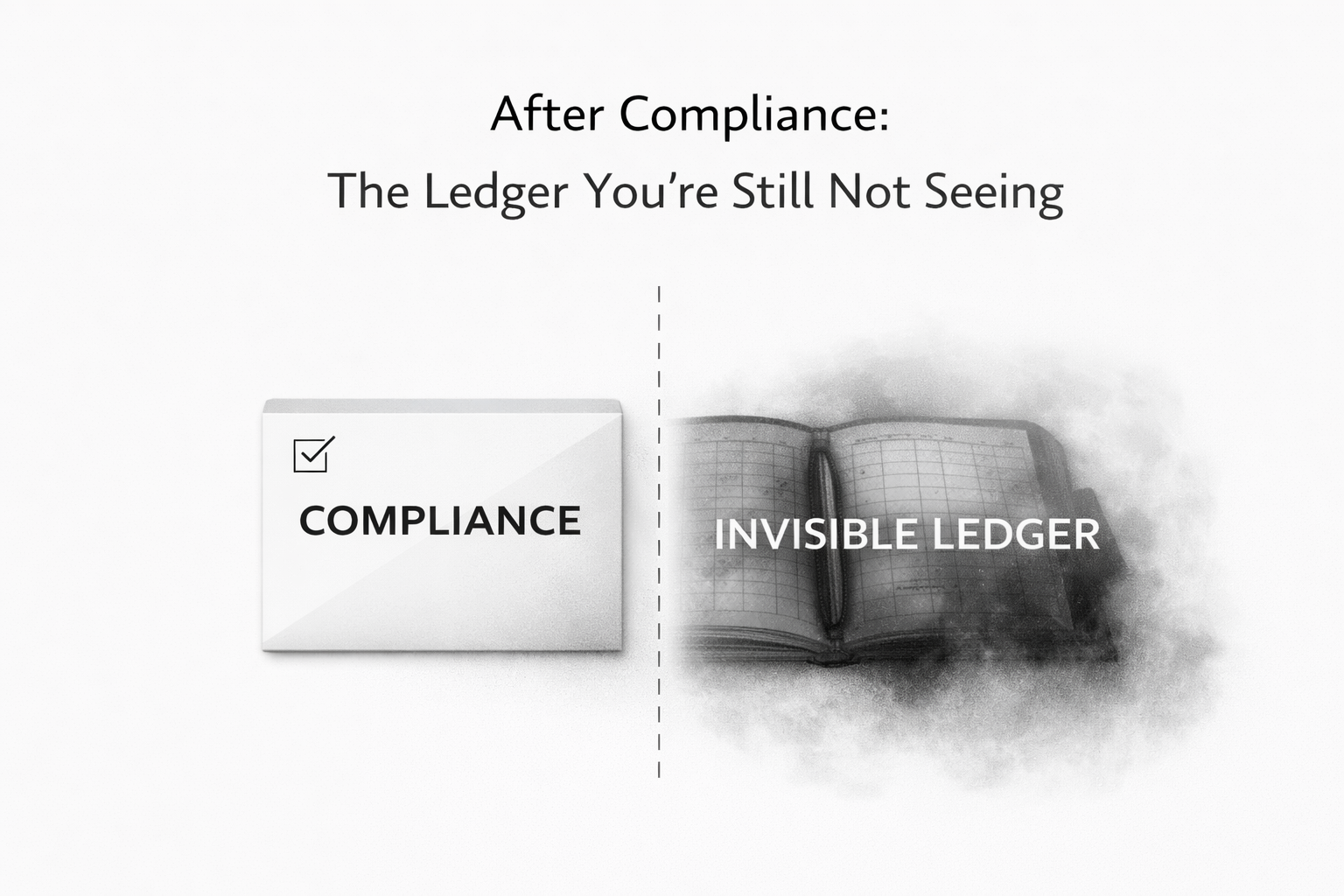
The Invisible Leak
While your P&L shows a “clean” cloud spend of $500k, it doesn’t show the structural technical debt accrued because that code was never architected for scale. It doesn’t show the Data Gravity liability that has effectively locked your organisation into a vendor-dependent position.
We are measuring the “exhaust” of the engine while ignoring the fact that the engine itself is overheating.
The Sovereignty Gap
In the “Ether Age,” enterprise value isn’t just driven by how much money you made last quarter; it’s driven by your Digital Optionality. Digital optionality is not abstract. It shows up as very real liabilities:
- If your data is “heavy” and unmovable, you have a liability.
- If your AI is a “black box” you don’t own, you have a liability.
- If your governance is manual and slow, you have a liability.
None of these appear on a standard GAAP balance sheet. They are the Invisible Liabilities that dictate your true valuation during an audit, a merger, or an exit.
The Question for Monday Morning
If an auditor walked into your office today and asked for the “Market Value of your Digital Sovereignty,” would you have a number? Or would you have a story?
Most leaders have a story and in a high-velocity market, stories are expensive.
#Governance #DigitalSovereignty #CFO #BoardroomLeadership #TheInvisibleBalance Sheet