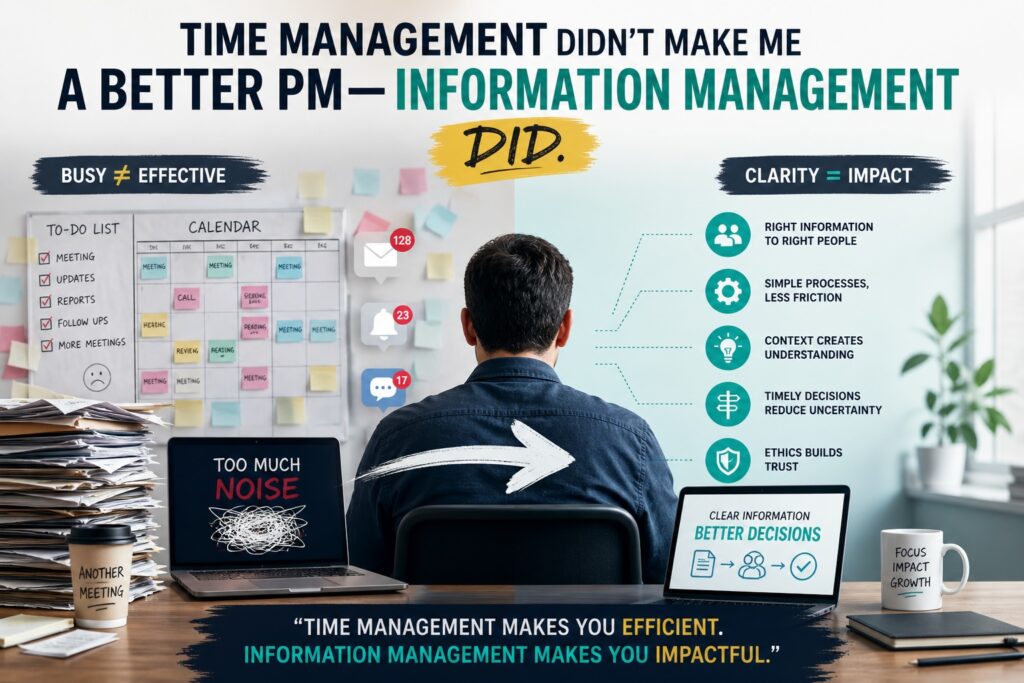
At one point in my career, my calendar was a masterpiece of modern art. It was a mosaic of color-coded blocks, back-to-back meetings, and “focus time” slots that let’s be honest, nobody actually respected.
I was the poster child for productivity hacks. I tried time-blocking, the Pomodoro technique, and even the “5 AM Club” (which lasted exactly three days). I became the person who said “let’s take this offline” as if it were a personality trait.
Yet, despite the optimised schedule, something was fundamentally off. Projects were moving at a glacial pace. Conversations were repeating in loops. The team was busy, but we weren’t aligned.
That’s when it hit me: I wasn’t overwhelmed because of time. I was overwhelmed because of poor information flow. —
The Illusion of Productivity
Time management makes you feel productive because it provides a checklist. You attend the meetings, you respond to the pings, and you move the cards.
But in project management, efficiency is a double-edged sword. You can be extremely efficient at doing the wrong things.
Progress isn’t measured by the number of emails sent or the hours spent in a conference room. It is measured by clarity, alignment, and decisions. If you have a perfect schedule but your team is waiting on a decision that hasn’t been communicated, your “efficiency” is actually an invisible bottleneck.
Redefining the PM: The Uncertainty Reducer
We often describe Project Managers as coordinators or trackers. I’ve come to believe that is incomplete.
A Project Manager’s real job is to reduce uncertainty.
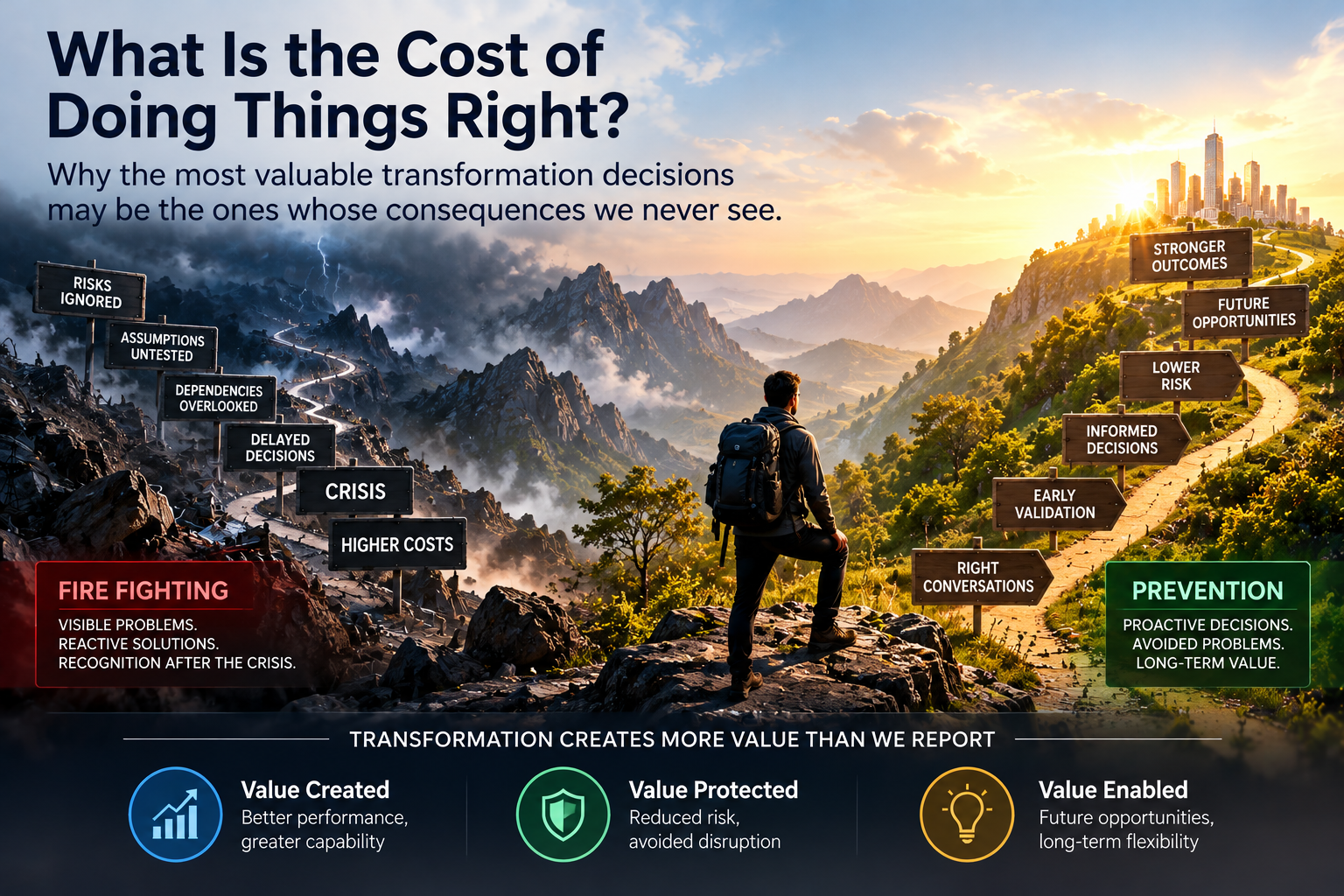
Uncertainty doesn’t slow projects down gradually; it compounds silently until everything feels urgent at once. It doesn’t stem from a lack of time it stems from missing information, miscommunication, and misaligned expectations.
The most critical skill a PM can develop isn’t managing a calendar; it’s managing information flow.
1. The PM is a Filter, Not a Messenger
Early in my career, I thought transparency meant sharing everything. I’d CC everyone on every thread and forward every risk report. The result? Engineers got overwhelmed, leadership got confused, and clients got nervous.
I had to learn the Three Rules of Information:
- Too much information creates noise.
- Too little information creates delay.
- The wrong information creates bad decisions.
A great PM is a translator. Engineers need technical clarity; leadership needs strategic synthesis; clients need confidence. Your job is to ensure the right information reaches the right person at the right time.
2. Process Should Reduce Friction, Not Create It
If a process requires a meeting just to explain how it works, it has already failed. The best processes are almost invisible; they guide behaviour without slowing it down.
People don’t resist structure; they resist meaningless structure.
Instruction: “Update this tracker daily.” (Result: Resistance)
Context: “This update prevents last-minute escalations and surprises.” (Result: Adoption)
When people understand the why behind the information flow, ownership increases. Good processes scale clarity. Bad processes scale frustration.
Decisions Without Certainty
The hardest part of this job is making decisions without having all the answers. Stakeholders want commitments, teams want more data, and you are stuck in the middle.
The instinct is to wait for perfect clarity. But in project execution, waiting is a decision and usually the most expensive one. I now use a simple filter for information-based decision making:
| Scenario | Action |
| If delay increases risk | Decide now. |
| If clarity is coming imminently | Wait intentionally. |
| If the decision is reversible | Decide fast. |
The Invisible Responsibility: Ethics in Information
Most project failures don’t start as failures. They start as small truths that were softened, delayed, or ignored.
Because a PM sits at the centre of information, you hold an immense amount of influence. You decide what gets highlighted, what gets buried, and how reality is framed.
This isn’t just coordination; it’s an ethical responsibility. Trust is the “invisible balance sheet” of any project. It is built when information is honest and communication is transparent. Once you use information to “spin” a failing status into a green one, you’ve broken a tool that no software or process can fix.
Final Thought: Impact Over Busy-ness
Time management makes you efficient, but information management makes you impactful.
If a team starts delivering better results, it’s rarely because they suddenly got smarter or worked longer hours. It’s because someone usually the PM improved the way information moves.
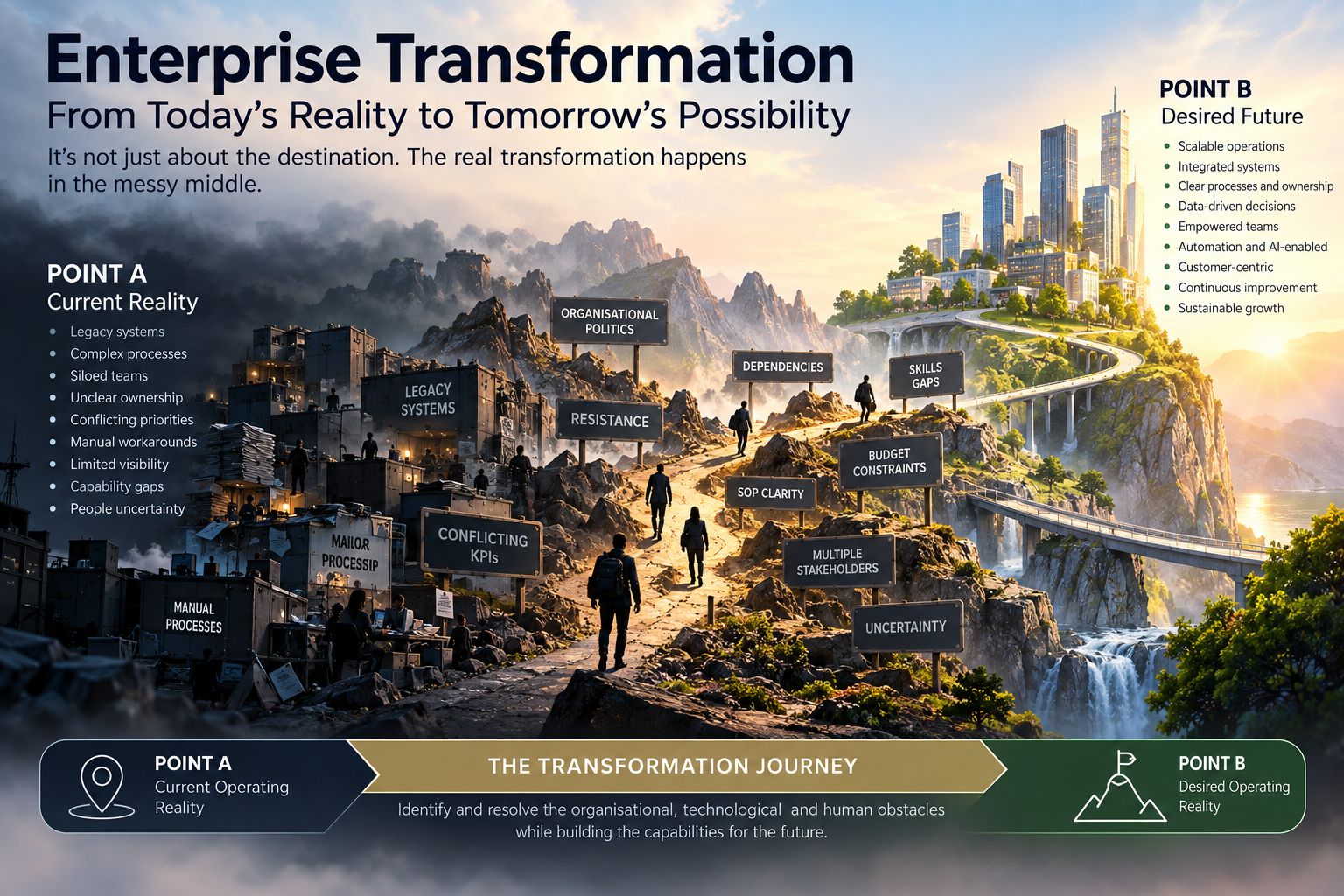
I still manage my time, but I no longer confuse activity with progress. In the end, transformation isn’t about the tools we use. It’s about clarity at scale.
#ProjectManagement #Leadership #Productivity #DigitalTransformation #PMO